Nigerian leaders see public office as family business – Emir Sanusi
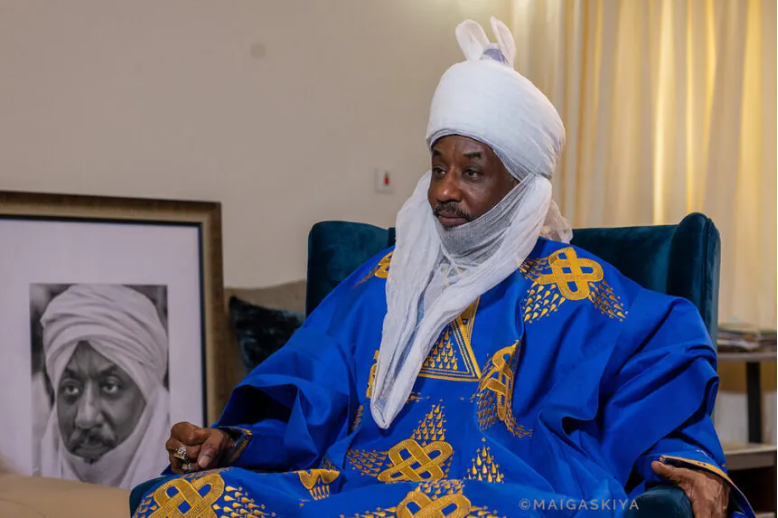
Emir of Kano, Muhammadu Sanusi, has accused Nigeria’s political elite of deliberately stalling the nation’s progress by treating public office as a personal enterprise rather than a responsibility to the country.
Speaking at the 15th anniversary celebration of Enough is Enough Nigeria in Lagos, Sanusi said the political class often ignores opportunities for development because their focus remains on themselves, their families, and their inner circles—not the nation or its people.
“We have done enough damage and maybe we need to stop. And I think this is the point Omobola is making about missed opportunities. Not just missed opportunities—sometimes deliberately missed opportunities,” he said.
“The reason we miss these opportunities is because we have people who think public office is about themselves, it’s about their families, it’s about people close to them, it’s not about the country. But public office is about the citizens.”
Sanusi urged young Nigerians to reject what he described as a dysfunctional system and commit to building a nation that reflects its actual promise. He said the country’s current political and social structure is one defined by “ethnic rivalries, religious conflicts, and competition for personal aggrandizement”, all of which, he warned, limit national advancement.
“The important thing for me is that as citizens, each and every one of us will remember that the nation belongs to us. It does not belong to the government, it does not belong to politicians, it belongs to us,” he said.
“We own this country and wherever we find ourselves, we must remember that we are holding one small part of Nigeria and we have a duty to do what we must, to contribute our own quota to this country.”
Sanusi called on Nigerian youths to unite across social, ethnic and religious divides to outline a coherent, attainable ideology for the country’s future.
“What we need to do is try to come together and articulate a clear and achievable ideological position, a vision for what kind of Nigeria we want to have.
“And it has to be a Nigeria different from the Nigeria that has been manufactured for us, a Nigeria of ethnic rivalries, religious conflicts, race seeking, competition for aggrandizement. It has to be a country that realises its potential in the committee of nations.”