
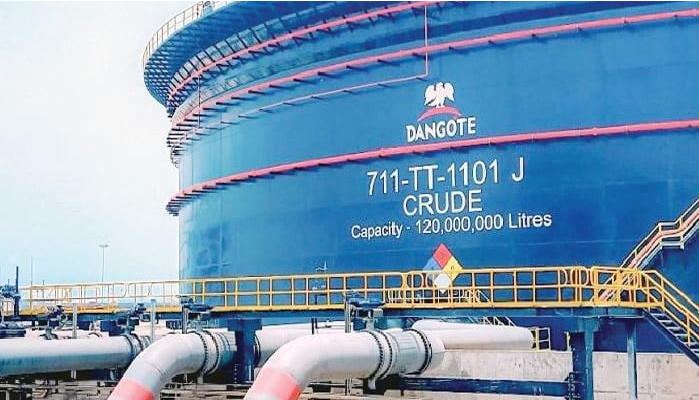
Dangote Refinery Halts Petrol Sales in Naira
The Dangote Petroleum Refinery has announced it is suspending the sale of petrol in naira — a move that has unsettled fuel marketers and stoked concerns over rising pump prices and increased volatility in Nigeria’s foreign exchange market.
In a notice to customers at 6:42 p.m. on Friday, September 26, the refinery stated that the suspension would take effect from Sunday, September 28, 2025.
According to the email — signed by the Group Commercial Operations of Dangote Petroleum Refinery & Petrochemicals and titled “Suspension of DPRP PMS Naira Sales – Effective 28th September 2025” — the decision followed the exhaustion of its crude-for-naira allocation, a special arrangement that had previously enabled the refinery to supply petrol in the local currency.
The refinery advised customers with pending naira-denominated transactions to request refunds.
“We write to inform you that Dangote Petroleum Refinery & Petrochemicals has been selling petroleum products in excess of our naira-crude allocations and, consequently, we are unable to sustain PMS sales in naira going forward,” the statement read.
It added: “Kindly note that this suspension of naira sales for PMS will be effective from Sunday, 28th of September, 2025. We will provide further updates regarding the resumption of supply once the situation has been resolved. All customers with PMS transactions in naira who would like a refund of their current payments should formally request the processing of their refund.”
The decision is not unprecedented. Earlier in March 2025, the refinery briefly halted sales in the local currency, citing the same challenge of inadequate crude-for-naira allocations. That suspension sparked a wave of concern over the potential dollarisation of fuel sales in Africa’s largest economy and contributed to petrol prices climbing to nearly ₦1,000 per litre in many parts of the country.
Friday’s announcement has again ignited fears that fuel costs could rise further if marketers are forced to rely solely on dollar transactions to secure supplies. Analysts also warn that the move could put additional strain on Nigeria’s already pressured foreign exchange reserves, with demand for dollars likely to increase among importers and distributors.
The refinery, commissioned as a flagship project of Africa’s richest man, Aliko Dangote, had been touted as a game-changer for Nigeria’s energy sector, promising to stabilise fuel supply, reduce dependence on imports, and ultimately ease forex pressures. However, recurrent disruptions linked to allocation formulas and pricing mechanisms have raised questions about its role in the domestic fuel market.
As of Saturday, it remained unclear how long the suspension would last or what alternative arrangements the refinery and the federal government might put in place to restore stability. For now, marketers and consumers alike are bracing for another period of uncertainty at the pumps.