Trump says Venezuela airspace should be considered ‘closed in its entirety’
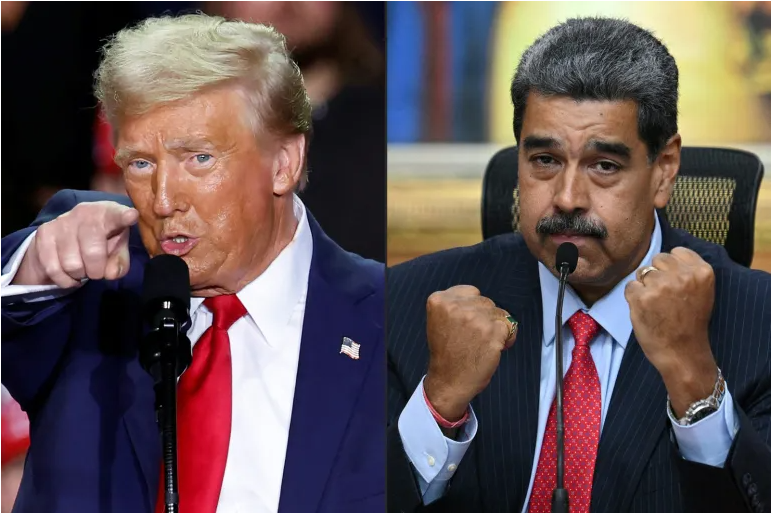
US President Donald Trump on Saturday, November 29, declared that the airspace over and around Venezuela should be treated as closed, issuing a stark warning amid escalating tensions with Nicolás Maduro’s government.
“To all Airlines, Pilots, Drug Dealers, and Human Traffickers,” Trump posted on Truth Social, “please consider THE AIRSPACE ABOVE AND SURROUNDING VENEZUELA TO BE CLOSED IN ITS ENTIRETY.”
He offered no further details, but the statement comes as Washington steps up pressure on Caracas with a major U.S. military deployment in the Caribbean, featuring the world’s largest aircraft carrier.
The U.S. says the buildup is aimed at combating drug trafficking, while Venezuela argues the real intention is regime change. Since early September, American forces have targeted more than 20 alleged Venezuelan drug-smuggling vessels in the Caribbean and eastern Pacific, leaving over 80 people dead — actions for which Washington has not provided evidence showing the boats carried narcotics or posed a threat to the United States.
The campaign, alongside the expanding military presence, has sharply escalated regional tension. US aviation authorities warned civilian aircraft last week to “exercise caution” when flying over Venezuelan airspace due to the “worsening security situation and heightened military activity in or around Venezuela.” That advisory prompted six major airlines—Spain’s Iberia, Portugal’s TAP, Colombia’s Avianca, Chile and Brazil’s LATAM, Brazil’s GOL, and Turkish Airlines, to suspend all flights to Venezuela.
Caracas reacted angrily, banning the airlines and accusing them of “joining the actions of state terrorism promoted by the United States government.” The New York Times reported on Friday that Trump and Maduro had spoken by phone the previous week and had even discussed a potential meeting in the United States. The claim surfaced one day after Trump warned that efforts to halt Venezuelan drug trafficking by land were imminent, further raising the temperature in an already volatile standoff.